Thank you, Brandon

Current Affairs

I’ve been following the Humans of New York (HONY) page on Facebook for a couple of years now and I’m still astounded everyday by the stories of strength, survival and resilience around the world. Recently, the founder of HONY and photographer, Brandon, has produced a series on paediatric cancer patients in New York, documenting the lives of cancer sufferers from the perspective of parents and patients.

All around the world and through social media we hear stories of cancer sufferers and their plight against the disease. So much so that the term ‘cancer’ is almost considered to be a taboo; whenever we hear the word we associate it with a death sentence. But what strikes me about these individual stories is the strength of the children who suffer with the disease on a daily basis, and their attitude towards it being nothing but positive. With their childhood almost robbed, they persevere with the determination to fight. Most of them don’t realise they’re sick, they consider themselves to be just the same as other children and that is what’s remarkable about these stories. It makes everything we complain about on a daily basis seem so mundane and minuscule in comparison to the sickness these young children fight everyday.

They’re an inspiration to us all. They show us that life isn’t too short at all, it’s too unpredictable to have a negative attitude towards. We ought to celebrate the good health we have and make the most of what life has to offer us. But we also ought to give the parents credit – those who remain as strong as they possibly can be for their children, because that in itself can only be debilitating, both emotionally and physically.

So thank you, Brandon, for making us realise how precious life is when you’re healthy. It’s something we take for granted all too easily. In the day-to-day rush of working or studying, we forget to appreciate what really matters. Our health, our families and each other. Thank you for giving these remarkable fighters a voice. They are the epitome of bravery. And they renew our faith in the health professionals who save lives everyday with their tireless efforts, as well as with God in His power to heal.

I urge as many of you as possible to donate money towards the MSK cancer centre and other charities; more money for these centres means more research facilities and a higher likelihood of finding cures for the devastating diseases.

And lastly, Brandon, we cannot commend you enough for all you do worldwide, from the refugee crisis in Syria to humanitarian crisis victims to cancer patients.

Brandon’s HONY blog: http://www.humansofnewyork.com

Donation page for the MSK Cancer Centre: https://www.generosity.com/community-fundraising/let-s-help-dr-o-reilly-fight-pediatric-cancer

A x

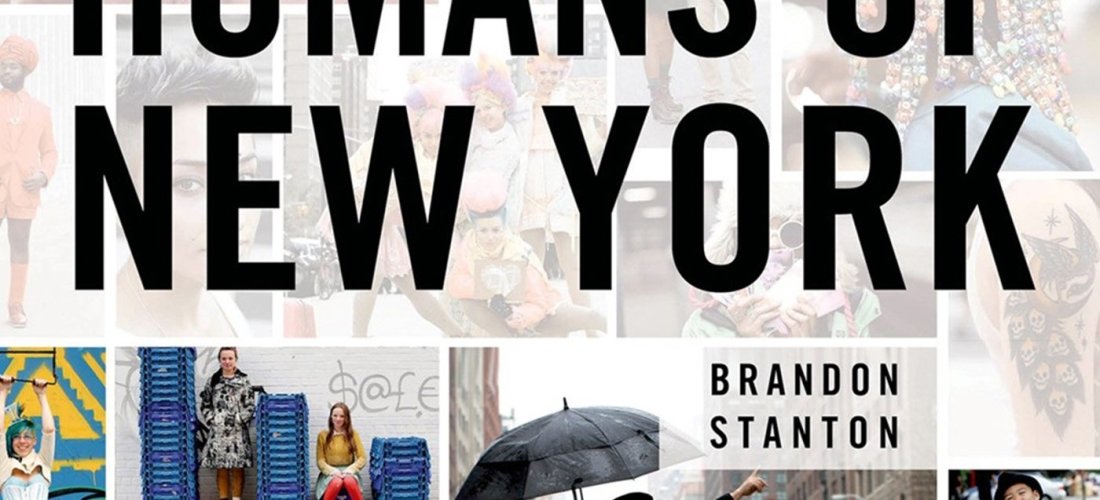
Featured image: Stanton’s book cover ‘Humans of New York’ on amazon
HEALTH UPDATE: MAY 2016

Life Updates

The waiting game.

It appears I spend most of my time waiting for things to happen; currently, I’m waiting to be seen by a specialist in the field of Sphincter of Oddi Dysfunction at Harley Street. Sadly, the NHS route proved to be an absolute disaster; I spent two months waiting for the appointment to come through to see a consultant who had an “interest” in the field of SOD at a tertiary centre hospital, only for him to tell me there was nothing he could do about my condition due to a substantial “lack of evidence” excluding my pain. It’s safe to say that I was livid after that appointment. His reluctance to do anything about my condition pretty much summed up why I have no faith in doctors – for over a year and a half, my condition has worsened yet they seem to intentionally brush over my three year-long suffering.

Sphincter of Oddi Dysfunction is a tricky little condition; for one, the Sphincter muscle in my bile duct is so tiny that the best way to assess whether it’s working properly (or not, in my case) is to go inside and undergo a procedure. The problem is this procedure carries the risk of inducing pancreatitis; having already suffered a bout of it two years ago, I’m not too keen to risk any chances of having it again because the pain is horrendous. Pancreatitis also runs the risk of inflicting life-long damage onto the pancreas, creating furthermore health problems. However, having exhausted many medicinal routes to tackle to pain I’m in daily with SOD, I’m running out of patience and options. Being bombarded with pain relief doesn’t solve the issue and it appears the doctors I’ve seen are almost reluctant to cure it, opting for a safer, non-invasive method of treating the symptoms.

Another problem is the relapses. Whilst I was away, I suffered from an episode of severe pain which landed me in hospital – not ideal when you’re in another country. The relapses occur almost every other month, drastically impacting my life with its unpredictability. Doctors perhaps perceive my desperation for medical intervention as just another kid who comes in with pain in their stomach. They don’t realise how badly this condition has ruined my life for the past three years. They can’t imagine being in pain for a solid 18 months because they’ve never been there.

I know it’s wrong to desperately hope for something when I’ve already been disappointed so many times before, but I sincerely hope this consultant will give me some answers this time. If not surgical intervention then at least another option to consider would be preferable. Being written off has destroyed me, physically and emotionally.

So, hopefully, in ten days I may just get some answers!

A x


Anisah vs Her Body: Round 3

Life Updates

2013: Laparoscopic Cholecystectomy. 2014: Pancreatitis. 2015-present: Sphincter of Oddi Dysfunction.

I’m stuck in a kind of stand off between myself and my doctors; they’re aware of how detrimental my condition is to my physical and mental wellbeing, yet they’re reluctant to take any action due to the potentially life threatening complications associated with it. It’s made furthermore frustrating by the fact that SOD is so rare in patients, especially at my age, too.

2015 was a year completely dominated by pain and I hope never to relive the experiences I endured that year again. When you’re in a situation such as mine, it’s incredibly difficult to adopt a facade of positivity and automatic “I’m fine” responses to the repetitive, rhetorical “are you okay?” In short; no, I’m not okay. It appears I’m fighting my body on a daily basis in the hope that it’ll stop trying to reduce me to my knees from unrelenting pain. But that’s not what people want to hear.

Thankfully, I appear to have inherited my parents’ strength and willpower; I am a survivor and I will fight this to the end, but its left me questioning – at what cost? I’m unable to go about my daily activities without being crippled by the pain at least twice during the course of the day. I can’t eat properly. The prospect of a (second) good university experience is hampered by pain. My anxiety is through the roof. It’s all a vicious cycle with no bright light – yet.

I’m a strong believer in things happening for a reason, by forces greater than us. There is a plan for me, I just need to trust in myself and those forces that I’ll make it through to the other side. It’s been a traumatising road these past few years and I’m incredibly tired of fighting, but I’m also desperately hoping this won’t continue for much longer and that this is just the final stretch in a (literally) gut-wrenching battle.

Throughout this ordeal, I’ve managed to retain a somewhat positive outlook on life fundamentally thanks to the strong support network of friends and family I have around me. I say this time and time again to the point where these words almost come across as empty but it’s thanks to my loved ones that I have come this far. My mother raised me to be strong, positive and almost certainly not a defeatist; my father raised me as a fighter. It is because of their support and unrelenting positivity not to mention belief in me that I’ve managed to make it this far. My true friends stood by my side and helped me battle against my health during my darkest hours, giving me the strength to fight when I thought I could fight no longer. I’ve come to know some truly wonderful people over the past few months who have completely changed my outlook on life, not to mention made me a better, stronger person. I cannot thank them enough for simply being in my life, and I know I’m blessed beyond words to have compassionate people around me. It’s because of these people that, during the dark hours, I can see a light. Perhaps it’s not the light at the end of the tunnel, but the promise of light is good enough for me.

So, amidst a sea of uncertainty, I’m going to give this illness everything I’ve got and battle through to the end, armed with a positive mindset and determination to overcome it before it has the chance to consume me. Forgive me if I backtrack every now and then, though.

On a final note, thank YOU to everyone who’s taken the time to simply read my blog, not to mention commenting on it, too. From my work colleagues to best friends to family friends: your support means the world to me. I don’t even need to tell you I love you; you already know. Without you, I would not be half the person I am today.

A x

Perspective

Life Updates

It’s March 2nd and my first day back home after spending 5 days in hospital has come to an end. I have thoroughly enjoyed being wrapped up in a blanket watching ‘The Night Manager’ and ‘The People vs OJ Simpson: American Crime Story.’ However, I’m not the same person I was when I went in to hospital.

Last Friday night, I was left feeling a little on edge after experiencing discomfort due to ongoing stomach pains. Of course, stomach pains are nothing out of the ordinary for me but they usually went away after an hour or so and even after taking medication, I was still suffering. Things reached a peak at around 11pm on Friday night; I was doubled over in pain, unable to breathe without feeling a stabbing pain rippling through my upper abdomen. Not cute. By 2.30am the following morning, I was hooked up to an IV line. Over the course of the next 5 days, I was transferred from a&e to the surgical assessment unit, to the day surgery unit. But that isn’t the point of this post.

Whilst in the day surgery unit, I came across many patients being admitted and transferred and I guess I should’ve been prepared for some sticky situations – after all, this was a surgical unit. On Monday night, a young patient was admitted to the bed next to me after undergoing surgery. It was clear that something hadn’t gone too great with the operation because she was screaming in agony and bleeding out. This was at roughly 10pm so visiting times were over and the rest of us in the bay were alone and it was pretty quite, with patients either zonked out on morphine or trying their best to sleep. Her parents were with her to ensure she settled in okay and was recovering from the operation, when things took a sudden turn for the worse. I heard the patient’s mother call the nurses frantically, telling them her daughter was feeling light-headed. Within two minutes, the patient had gone into cardiac arrest from bleeding out.

The next 20 minutes were a blur of surgeons, anaesthetists and nurses running around, giving her oxygen and trying to stop the bleeding. With no theatres free to perform emergency surgery, they were forced to stop the bleeding there and then in order to save her life. Her parents were hysterical with fear and surgeons were shouting about the lack of blood bags available to them – it was terrifying. I guess I forgot that in hospitals, things do go wrong and situations like this do occur. It’s not common but it does happen and in the moment, everything just fell away. The pain I was experiencing, the sickness, all the symptoms just fell away because all I was thinking of was how young this girl was next to me and how numb I felt.

I don’t know if they managed to save her. She didn’t come back the following day, and neither the nurses nor other members of staff had any clue as to what happened in that operating theatre. Situations like this put everything into perspective; life is too unpredictable and we ought to make the most of the good health we have. What is life if we don’t have our health? Right now, I can’t get those 20 minutes out of my head. I’m not sure if I will forget the panic in her parents’ voices, the panic in the surgeons’ voices and the sound of the blood pressure monitor dropping. It’s a horrific reminder of the fact that we’re only on this planet for a limited amount of time and we ought to make the most of every single second; by being good within ourselves and towards others. Whether you believe in God and His power to guide you or not, it’s important to have a pure heart as that alone makes us immortal.

“Is not He Who listens to the distressed soul when it calls on Him, and remove its suffering, and makes you inheritors of the earth?…” [Surah al-Naml 27:62] 

A x


Eating Disorder Awareness Week 2016

Life Updates, Mental Health Activism & Awareness

This week marks Eating Disorder Awareness Week. This month marks 10 months since I beat my eating disorder.

I guess the first stage of overcoming it was actually coming to terms with having an eating disorder; admitting to myself that I was struggling to cope with the operations I’d had the year before and just missing out on my grades to get into uni. In many ways, starving myself was a coping mechanism as well as a method of maintaining control over my life through my body weight. So admitting to my parents and my psychotherapist that I had a problem was the first step on the road to recovery.

The second step was finding the courage to seek professional help; that in itself took the longest. My mum’s friend is a therapist and recommended a few private professionals as the prospect of being put on a waiting list when my condition was getting so serious was impossible to accept. After flat out refusing to see/talk to anyone about my problems for well over a month, I realised I’d either have to pluck up the courage to talk through my anxiety and pain or spend the rest of my life miserable, isolated and starving myself until I was close to death/actually died.

My first session with the psychotherapist was incredibly daunting; naturally, every instinct in my body was telling me not to trust her because she was an outsider. My brain was screaming she won’t understand. I think she, too, saw my apprehension and helped me work through it by sorting through my personal life piece by piece. She began compiling a timeline of every significant event in my life, from starting high school up until present day. Of all things, I didn’t expect a chronology to be as helpful as it eventually proved to be, because once she’d organised key moments of my childhood and adolescence into categories on her timeline, it eventually unravelled what the cause of my anxiety was.

My anxiety had physically manifested itself into an eating disorder and the only way I could tackle the eating problems was to tackle the anxiety first. This was, and to some extent still is, incredibly difficult. Seeing a therapist every week was incomprehensibly effective as she helped me trawl through the trauma I’d experienced essentially since high school, and soon this slow but steady psychological improvement was reflected in my eating habits. The root of my eating problems was ultimately a lack of self esteem, originating from mistreatment and psychological trauma at my high school. Teachers and a few students made me feel worthless and I guess I spent 6 odd years growing up with the belief that I was nothing but a failure. Once my therapist helped me through this harrowing acceptance of my high school experience, I began to accept other aspects of my life, too. For example, my physical health deteriorated rapidly in 2013 and the trauma of relentless, disabling pain also took its toll. Over the course of a year, I managed to work through the psychological aspects of my life which were contributing to a lack of self esteem and my anxiety attacks. 

The other fundamental factor of overcoming my eating disorder was accepting that my body was a thing to be loved, not loathed. I was so desperately trying to achieve an ideal body weight that I lost all sense of rationale. This ideal body weight soon became dangerously life-threatening which is when my parents confronted me about why I was so thin, and why my hipbones were sticking out through my jeans. I was incredibly careful to hide everything from them; from putting food wrappers in the bin despite eating none of the contents, to wearing baggy clothes. (thereby hiding my weight loss) I used to starve myself from morning until 5pm, binge on whatever junk food I could find, only for it all to come back up because my stomach was shrinking and couldn’t tolerate a massive influx of food in one go. Due to my inability to keep food contents inside my body, I was rapidly losing weight but no one really noticed, so I kept pushing to lose more. Over the course of the year that I received help for the eating disorder, I learnt to love myself a lot more. Surrounding myself with good, positive influences and detaching myself from toxic, negative people is ultimately what saved me. 

It’s incredible how many people compliment me on my body now, three sizes up from what I was two years ago. It’s also incredible how far I’ve come, emotionally and physically, since high school. Beating the eating disorder not only saved my life but it also helped me get over the trauma of my high school experience. It made me realise that I’m a survivor.

I cannot emphasise how important it is for people to show solidarity amongst understanding and compassion for those suffering from eating disorders. Sticking around for someone can make a world of difference. Whether it’s a shoulder to cry on or a hand to hold when times get tough, just being there is what helped me through my darkest hours. Cowards walk away from people in desperate times of need. Don’t be that person.

Here’s a list two websites which helped me in times of need, too:

https://www.b-eat.co.uk 

http://nedawareness.org

A x

Save Our NHS: Fight the Junior Contract

Current Affairs

I’m both saddened and appalled at the strikes going ahead over the next few weeks, but I support the junior doctors in their decision because I hope it serves as a wake up call to this blindly ignorant government.

Although this isn’t the first strike to take place over working hours, it’s shocking to see the government’s utter nonchalance at this whole situation, with Hunt instead referring to those striking as “trade union militants.” Junior doctors are striking against unjustifiable hours, and rightly so.

Three years ago, I held most junior doctors in utter contempt simply because of my experience in an NHS hospital which left me in an increasingly worrying state of health, both physically and mentally. The doctors I came across were completely unexperienced and out of their depth when they came to me, primarily because my body was rejecting all medication and they were at a loss as how to treat me. However, with 2015 being the year which saw my accident and emergency admissions at an all time high, I’ve come to realise that my experience three years ago was fundamentally due to the hospital and certainly isn’t an accurate representation of junior doctors over the country. They sacrifice everything for us and we tend to forget that a free health service is a luxury in many senses; free services, 24 hour emergency rooms, surgical intervention being free. Of course, there’s many downsides to the NHS which can be inferred as counteractive but the fact that these people are working day and night to help us is something we cannot and should not take for granted.

Hunt, along with the rest of this pathetically useless government, are dissuading the public from supporting the doctor’s strike by claiming harm will come to those with pre-booked appointments, particularly the elderly and cancer patients etc. Bullshit. The appointments have not been cancelled, they’ve been rebooked for a later date. If the patients were in such grave danger, surely they’d be admitted into hospital and be under the care of surgeons, registrars and senior consultants? Outpatient appointments have been affected but this is not the end of the world. It’s really not that big of deal compared to what these doctors endure daily. If we had even an inkling of what their schedules must be like, we’d hardly be kicking up a fuss and Hunt’s position would most definitely change. It’s very easy to criticise a strike when you won’t be remotely affected by the consequences of your own actions.

Hunt also claims that the lives of the public will be put in danger, but he’s failing to register, or possibly ignoring, the fact that lives will be in danger with overtired doctors. They’re more likely to make a mistake if they’re unsafely overworked. This kind of gross ignorance sums up the government. Surgeons, nurses, doctors, they’re all working incomprehensible hours out of their own goodwill, and a disregard for this is inhumane.

If anyone is to be blamed over this walkout, it’s David Cameron and his NHS cuts. The only people “damaging” patients’ health is this government.

I support the junior doctors, and their decision to oppose a cut in pay as well as overworking to the point of disregard for their own health.

#SaveOurNHS

#JuniorDoctorStrike

“Work Smarter, Not Harder.”

Original Writing

Sigh.

I was on Facebook not too long ago and came across someone saying this. Multiple times. And I began to get increasingly frustrated with its context.

In this age of crash dieting, juice diets and fitness fads, there’s a slight issue which continues to crop up on my social media accounts and hits a nerve. Recently, I was told about a new “way to lose weight.” I’m not going to name the company but their suggested method of losing weight is to take their “capsules” which supposedly contain “30 kinds of fruits, berries and vegetables” that you take daily. Instead of eating food during the day, they advise you to drink their milkshakes which are also “plant based and a healthy alternative to food.”

In other words, you pop two pills and drink milkshakes all day so the weight will drop.

I have never tried diet pills and I most certainly don’t intend to, so I cannot personally admit or deny their effectiveness. However, I have read reports by scientists, health experts and a personal trainer who have all agreed that this system does NOT work. You are essentially starving your body of necessary food groups such as fat and carbohydrates in order to shed a couple of pounds. The worse aspect; the pounds aren’t actually shed at all, but put back on once you eat normally.

In 2014 I developed an eating disorder. I stopped eating completely, lost so much weight that the doctors became concerned and recommended a complete lifestyle change.I also required therapy to work through and come to terms with what I was suffering with – I’ve underlined the word because going through something as damaging as an eating disorder never really leaves you. It remains in the back of your mind as a constant reminder of what once was: in some ways, it still haunts me. When I look at pictures of myself on holiday, I grimace at the bones sticking out. It’s one of the worst things anyone can go through.

That is why I’m so against diet pills and more specifically, the idea of someone starving themselves to lose weight. Furthermore, over the last year or so, I’ve managed to turn my life around despite all the health conditions I’ve run into along the way. Like most people, I work my absolute hardest to be a healthy weight and a healthy person in general. They do say that if you’re not soaked in sweat, you’re not doing it right! There’s simply no easy way to lose weight.

The company I referred to above work as promoters for their products; their employees talk about the benefits of their products and how becoming a part of their team is the best thing you can do. Ultimately, they’re working from home (ideal, right?) by selling products to desperate women predominantly. They also get paid a HELL of a lot for conning customers. This is where I saw the titled remark of working smarter rather than harder, and thus is the point of my article.

Duping customers is not in my nature and certainly won’t open as many doors as my current job has. Starving my body will not make me as healthy as doing exercise and eating healthy will.

A x


World Mental Health Day 2015

Mental Health Activism & Awareness

A couple of days ago marked World Mental Health Day, a day of showing awareness and support for those suffering from mental health conditions. As an anxiety sufferer, I believe mental health is grossly belittled and not enough is done to support those who have to live with harrowing mental health conditions.

It took me nearly two years to fully understand what I suffered from. Having both general and social anxiety is a pain in the bum; it affects literally every part of your life. From getting on public transport to walking into a doctor’s waiting room, and even walking into a room full of family and friends, it’s a dreadful thing to live with. And that’s just the social aspect! When my therapist told me the feelings I was suffocated with on a daily basis were related to anxiety, I was confused, scared and ashamed. I didn’t tell anyone for months, not even my parents or family. In my head, anxiety was a weakness and I was simply a weak person who couldn’t control her emotions.

The first person I told was, at the time, my best friend. He helped me through the worst periods of anxiety and rescued me when I felt like I was drowning in my thoughts. Having someone there by my side whilst my brain exploded into a million thoughts was a blessing. In fact, without him, I would not be sitting here today; he saved me from myself. Anxiety in a nutshell is overthinking every little part of your life until, to use the cliche phrase, a molehill becomes a mountain. You end up worrying over everything, thinking you’ve done something wrong or there’s something wrong with you; you feel like no one will understand what you’re thinking and in most cases, sadly you’re right. Not many will understand you. But it’s finding the support systems and networks out there to help those who feel completely isolated by their conditions which is so imperative. The fact that many people feel the need to see professionals privately is absolutely absurd and a complete failure of the government in supporting their vulnerable citizens. The idea of someone, or someone’s parents, paying £70 for a professional to help one through an ordeal as traumatising as their own psychological disorder is shameful. No one deserves to be given the ultimatum of private professional help or being dismissed onto a waiting list.

I’ll ask you a question: if a cancer patient, or a terminally ill patient was told they needed to wait to seek treatment for their condition, is that considered acceptable? No. There would be a public outcry at the injustice of forcing an unwell patient to wait. So, what makes mental health any different from physical health? We may not be hurting physically, but we are hurting mentally. Cries of pain can come from within, unnoticed by others. Mental health is JUST as important and life-threatening as physical health. I suffer from both myself and can confirm that my physical suffering, which has been rather intense and at times, unbearable over the past three years, was just as painful as my mental suffering. So throwing someone under the carpet with the insincere promise of a “waiting list” is pathetic.

More needs to be done to support mental health sufferers. More needs to be done to help sufferers come to terms with what they have, so they can move forward and control it.

Right now, it’s explicitly clear that the government has failed us. Now’s the time to make a difference, with or without Cameron’s help.

“Tell the Wolves I’m Home”, Carol Rifka Brunt

Book Reviews

Having just finished this novel, I’m full of questions and admiration for Brunt. Written in 2012, set in the 1980’s, it certainly addresses the taboos of society during this era surrounding AIDS, through the protagonist’s journey of realisation and love. June Elbus: the epitome of innocence interlinked with a newfound sense of rebellion. Her journey of learning to accept a wrong love is both poignantly naive and heartbreaking as she understands the ramifications of her unrealistic desires. What’s  additionally poignant is the fact that Brunt outlines the direction of the novel from the first page: we understand that we have to accept a loss before we turn to the second page.

I think the most interesting concept in this novel is we ultimately know what will happen in the end. There’s a foreboding death hinted throughout the second half of the novel, very subtly understated yet very prominent in the actions and decisions of the characters. In many ways, Toby’s death is just as painful as the loss of June’s innocence. We as readers grow to accept Toby for the actions he is accused of and what he has done, and our love for Toby is reflected through the endearing, innocent June and her love for Toby. We learn to admire Toby for who he is and everything he stands for, not for the supposed crime he has committed and what has happened to Finn.

Toby is everything Finn is not and that’s quite possibly what makes him so charming; he’s not an artist, he doesn’t have family in the country and he’s estranged from everyone and everything he knew. He’s learning to make his own way in this prejudiced world, alone and at a distinct disadvantage fundamentally due to his sexuality alienating him. His death hits the reader and June very deeply, almost unfairly snatched from us both as his true identity begins to unravel before us.

The topic of AIDS is so beautifully expressed in this text; Brunt confronts the issue with compassion and fragility, similar to the characteristics possessed by it’s victim, Finn. Times have changed with regards to AIDS and it’s treatments/cures which the reader will recognise whilst following the protagonists’ journeys, but we’re nevertheless transported into a time where AIDS was believed to be as  lethal as the plague and anyone in a close radius of a patient will consider themselves at risk of “catching” it.

I find the character of Greta most compelling, however. She is immediately and instantly dislikable with her cruel and cutting attitude towards her little sister; she’s calculating and malicious once she realises what her younger sibling is doing. Yet, we understand she’s coming of age and is fighting her own battles which torment her, too, thus making her a sympathetic figure by the end of the novel: we admire her and respect her, finally. Her fear of losing her younger sibling to another love she refused to offer results in her acting with cutting maliciousness through cold remarks and sarcastic rhetorical questions. Greta is quite possibly the smartest character in the novel and although she makes mistakes, they’re understandable and forgivable. Her brief snapshots of kindness and mature, older-sibling care are greatly appreciated by us, not so much by June as we understand before she does what exactly she’s going through; quite possibly some of the readers have experienced her internal conflict, too, and the evaporation of childhood towards the rush of entering adulthood.

We laugh with Finn and June as we follow their footsteps, internally grimacing and sympathising with June as she naively mistakes familiar compassion for romantic love and we cry with June as we lose someone we barely know, yet adore nevertheless. The embedded innocence in all of the characters is something conveyed so exceptionally by Brunt, connecting the reader to the character. The loss of two of the most beautiful souls is something the reader struggles to come to terms with, just as June and Greta do, yet we are comforted with the knowledge that they loved and were loved in return, in equal measure. And that’s fundamentally important for every living soul: to love and be loved.

A x

Dissipate

Mental Health Activism & Awareness

They’ll ask me: “what’s wrong?”

with the expectation of hearing “I’m fine”
to which they accept
and move on.
And so do I.
Inside, I’m far from fine;
I cry at everything
not knowing why.
I sleep a maximum of four hours a night.
“I’m fine.”
The offers for help are vacant.
“It’ll be okay” soon becomes
“maybe you’re overthinking things a little?”
You can help me with my maths homework
but you’ll never help me solve
the puzzles in my head.
One plus one doesn’t always equal two
up here.
You can’t help me get rid of the monsters under my bed.
“I’m here if you ever need a shoulder to cry on”-
fucking liar.
That offer is far too soon retracted.
I’m here for you if your boyfriend dumps you
but that’s all I can offer you.
My problems are not as shallow as that.
The depth of my problems compete with the ocean;
what will drown me first?
I guess I’ve learnt over the years
there’s only one hand that will reach down for you
into the abyss,
whilst you’re drowning and gasping for air.
Trying to gasp hold of the last fragments of sanity
as they dissipate between your fingertips.
That hand, my friend
is yours.